



December 2025 | Media Releases+
Woolloomooloo Wharf honoured with global legacy award
Sydney’s heritage listed Woolloomooloo Wharf has been recognised on the world stage, becoming the first Australian project to ever receive the prestigious Urban Land Institute (ULI) Asia Pacific Legacy Award.

Sydney’s heritage listed Woolloomooloo Wharf has been recognised on the world stage, becoming the first Australian project to ever receive the prestigious Urban Land Institute (ULI) Asia Pacific Legacy Award.
Recognising places that continue to deliver exceptional civic, cultural and economic value decades after completion, the Wharf joins an elite group of global icons that have received the Legacy Award, including New York’s Rockefeller Centre and Hong Kong’s Pacific Place.
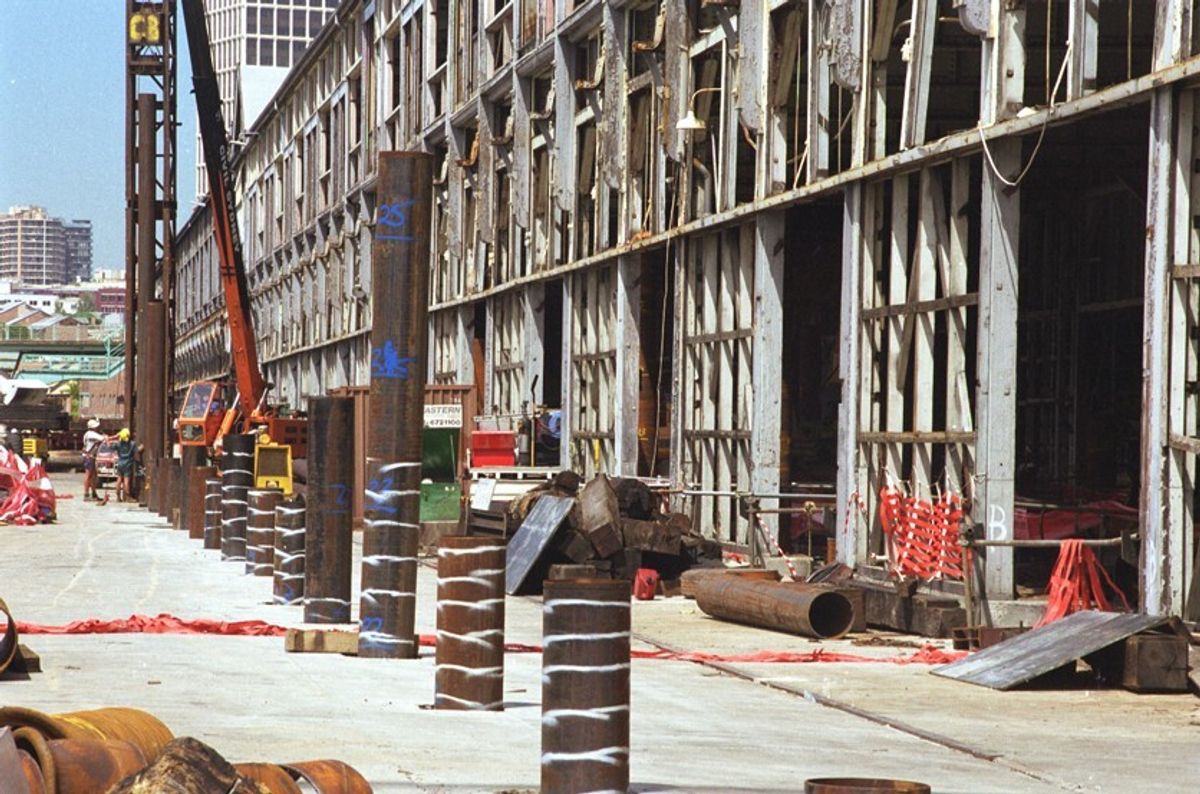
Originally constructed between 1910 and 1915, the Wharf was once the largest timber piled finger wharf in the world, stretching more than 400 metres and serving as a powerhouse of Australia’s wool trade, naval operations and post war migration.
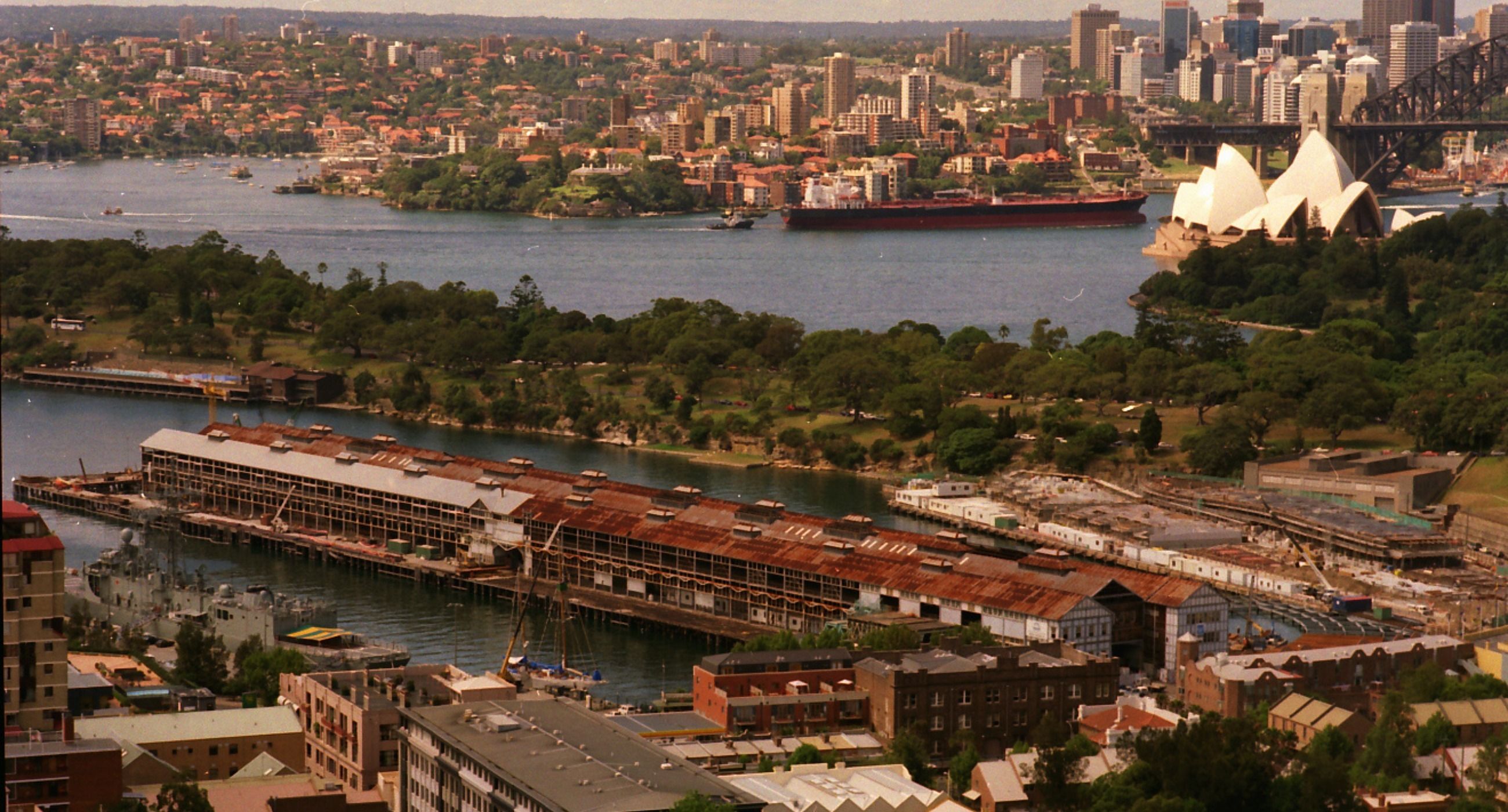
North westerly view across Woolloomooloo Finger Wharf Redevelopment, 1998 - Photographer Brian McInerney, courtesy City of Sydney Archives
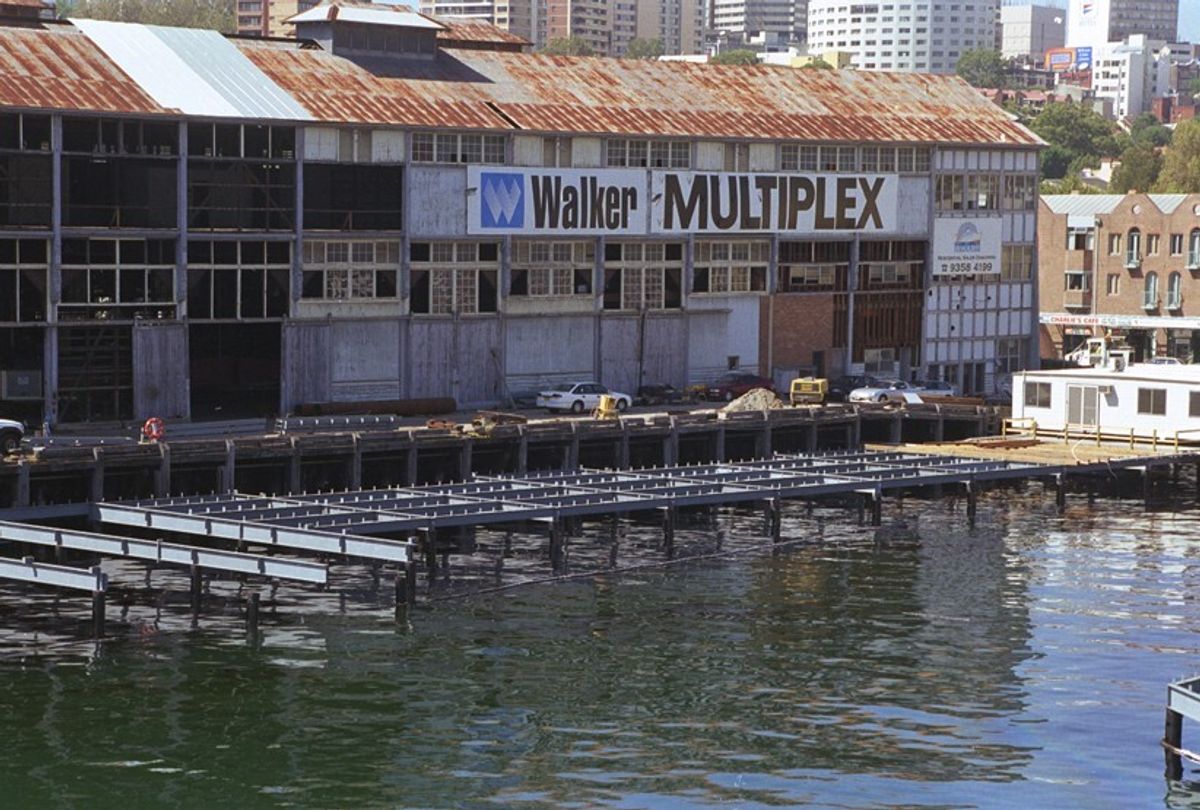
By the 1970s, containerisation and shifting port activity had left the Wharf derelict and facing demolition. Its fortunes changed in 1996 when Lang Walker AO and Walker Corporation acquired the site and undertook a $400 million dollar waterfront restoration that was completed in time for the Sydney 2000 Olympic Games.
Walker’s Managing Director and CEO David Gallant said Woolloomooloo Wharf pioneered a new era of waterfront renewal in Sydney by demonstrating how heritage can enrich civic and cultural life and catalyse opportunities for communities, tourism and investment.
“Lang Walker led one of the most significant heritage restorations ever undertaken in Australia at a time when demolition was considered the easiest solution. His tenacity helped preserve a national landmark and created a waterfront community that is still thriving more than 25 years later.”
David Gallant - Walker CEO
“We are honoured to accept this award for Lang, adding to the legacy of vision and persistence he brought to creating places that truly stand the test of time.”
“The Wharf came with a 100-year maintenance plan and a placemaking philosophy that continues to guide Walker precincts, from early projects like King Street Wharf and Rhodes Waterside to major urban transformations such as Parramatta Square and Maroochydore City Centre on the Sunshine Coast.”
Heritage expert and former Director of the National Trust NSW Stephen Davies said the Wharf’s rescue remains one of Australia’s most important heritage wins.
“Woolloomooloo Wharf is one of the finest examples of early twentieth century wharf engineering in the world,” Mr Davies said.
“Its conveyors, electric lifts, gantries and magnificent Federation style timber sheds represent an era of craftsmanship that cannot be replicated today.”
“Had it been demolished, Australia would have lost irreplaceable chapters of its wartime history, its wool shipping identity and the arrival point for generations of migrants. Its preservation changed the way NSW thought about industrial heritage.”


China Doll General Manager Solange Cech said the Wharf’s character has shaped the restaurant’s identity for more than two decades.
“China Doll has grown up with the Wharf,” Solange said.
“Long lunches by the harbour have become part of our story. People feel a real connection to this place. To see the Wharf recognised globally is incredibly special for all of us who have been part of its journey.”
“There is nowhere else in Sydney where heritage architecture, the water, the energy of the boardwalk and world class dining come together like this.”
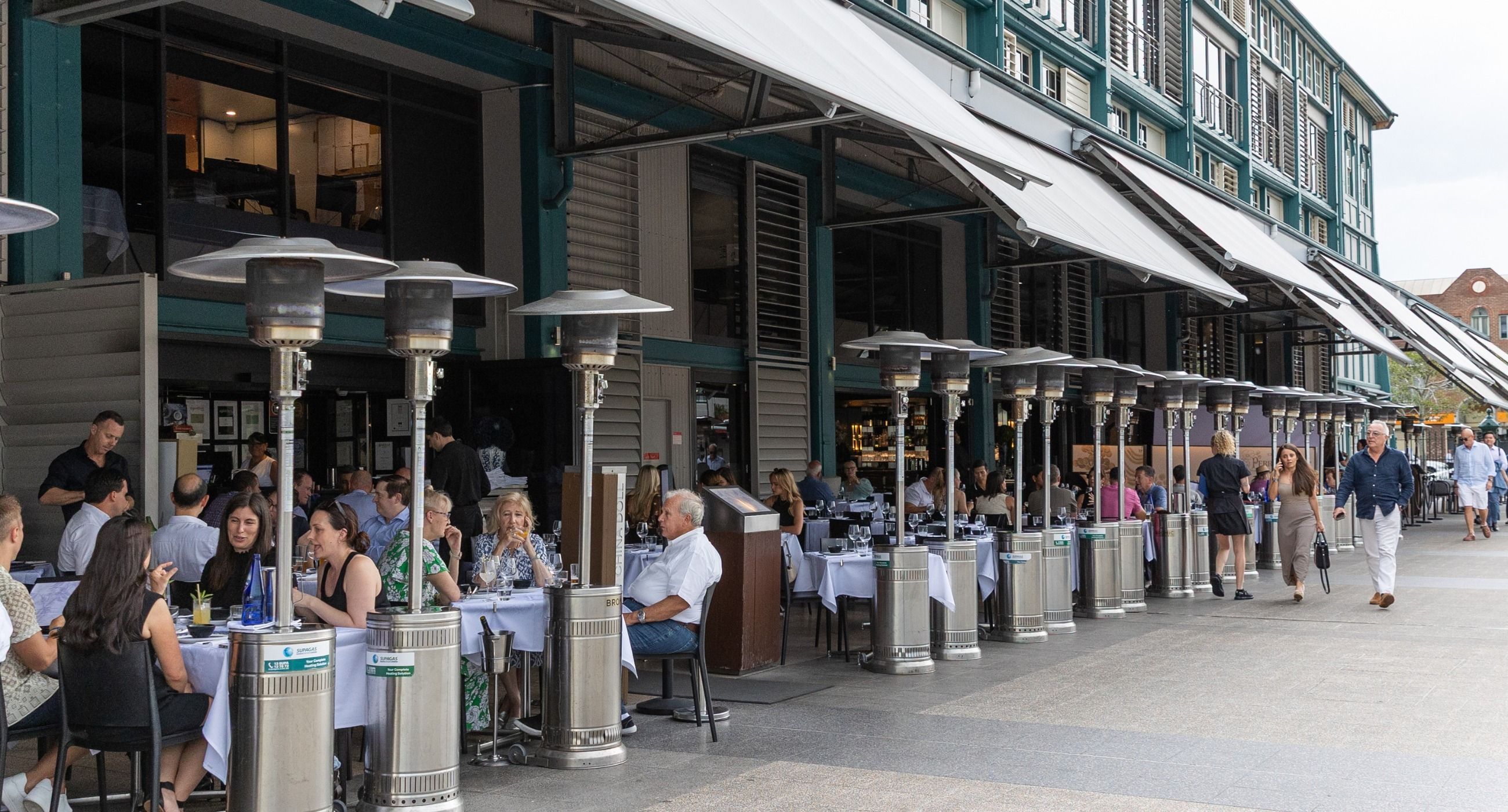
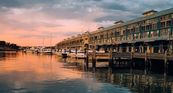
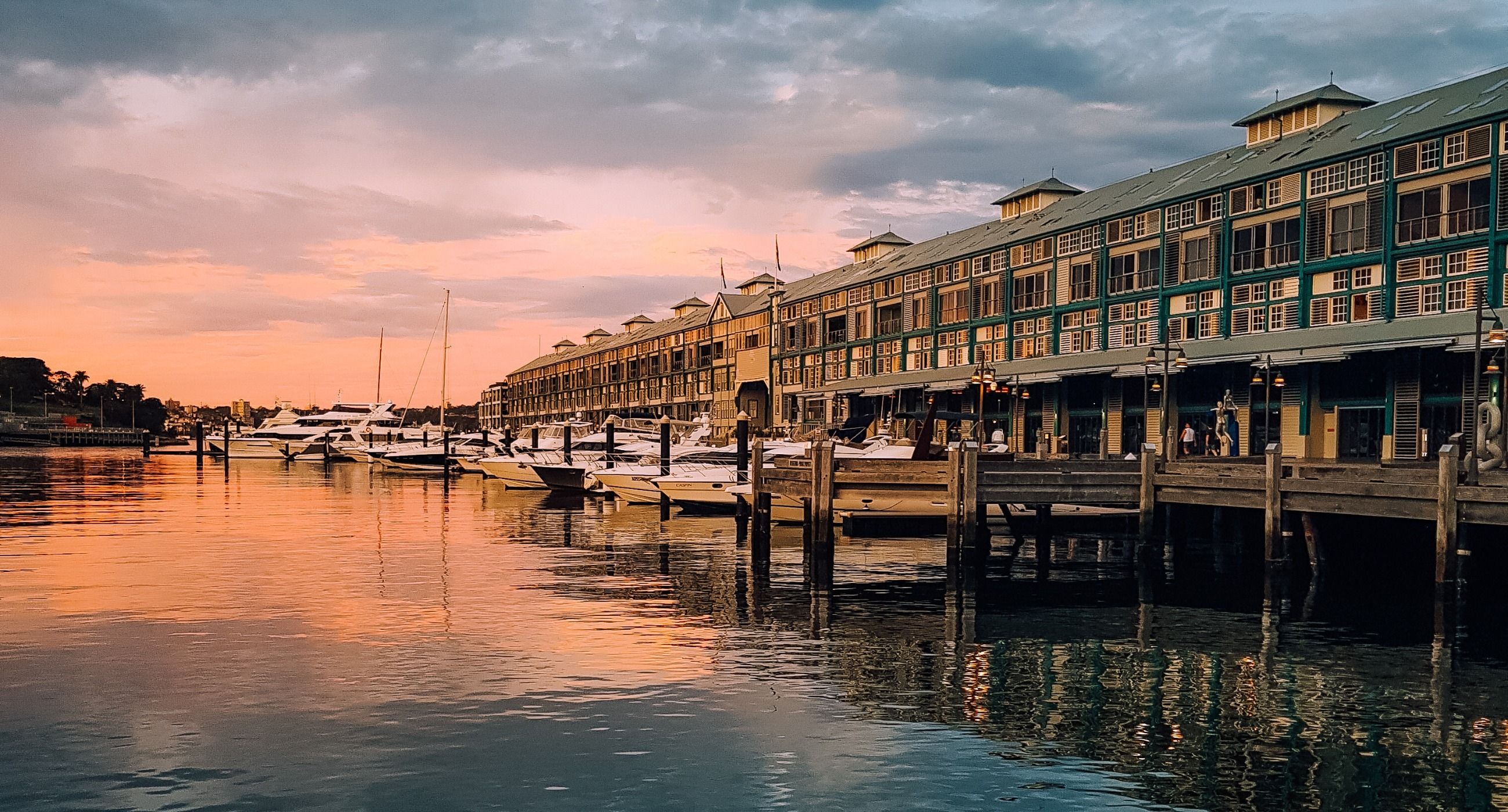
The busy restaurant boardwalk pictured in 2025
A century of significance
Built between 1911 and 1915, the timber “Finger Wharf” was the largest wooden structure of its kind in the world at the time.
At its peak in the 1920s to 1960s, it handled most of Australia’s wool exports, earning Sydney a reputation as the ‘wool capital of the world.’
Serving as a key wartime hub, the Wharf played a critical role in Australia’s military history, supporting troop deployments, supply logistics and returning soldiers during both World Wars.
Stretching 400 metres long and 63 metres wide, it remains one of the longest timber-pile finger wharves in existence.
By the 1970s, the shift to modern shipping containers and relocation of port activity had left the wharf derelict and slated for demolition.
It was saved in 1996 when Walker Corporation acquired the site, leading to a $400 million restoration completed in 1999.
The Wharf Reopened in time for the Sydney 2000 Olympic Games, becoming a showcase of heritage preservation and urban renewal.
Walker worked with Heritage NSW to develop a 100-year maintenance plan, showcasing leading heritage restoration and waterfront construction practices. By replacing the original timber piles with reinforced concrete, the project ensured long-term durability and set a new benchmark for sustainability well ahead of its time. It was listed on the NSW State Heritage Register in April 2000.

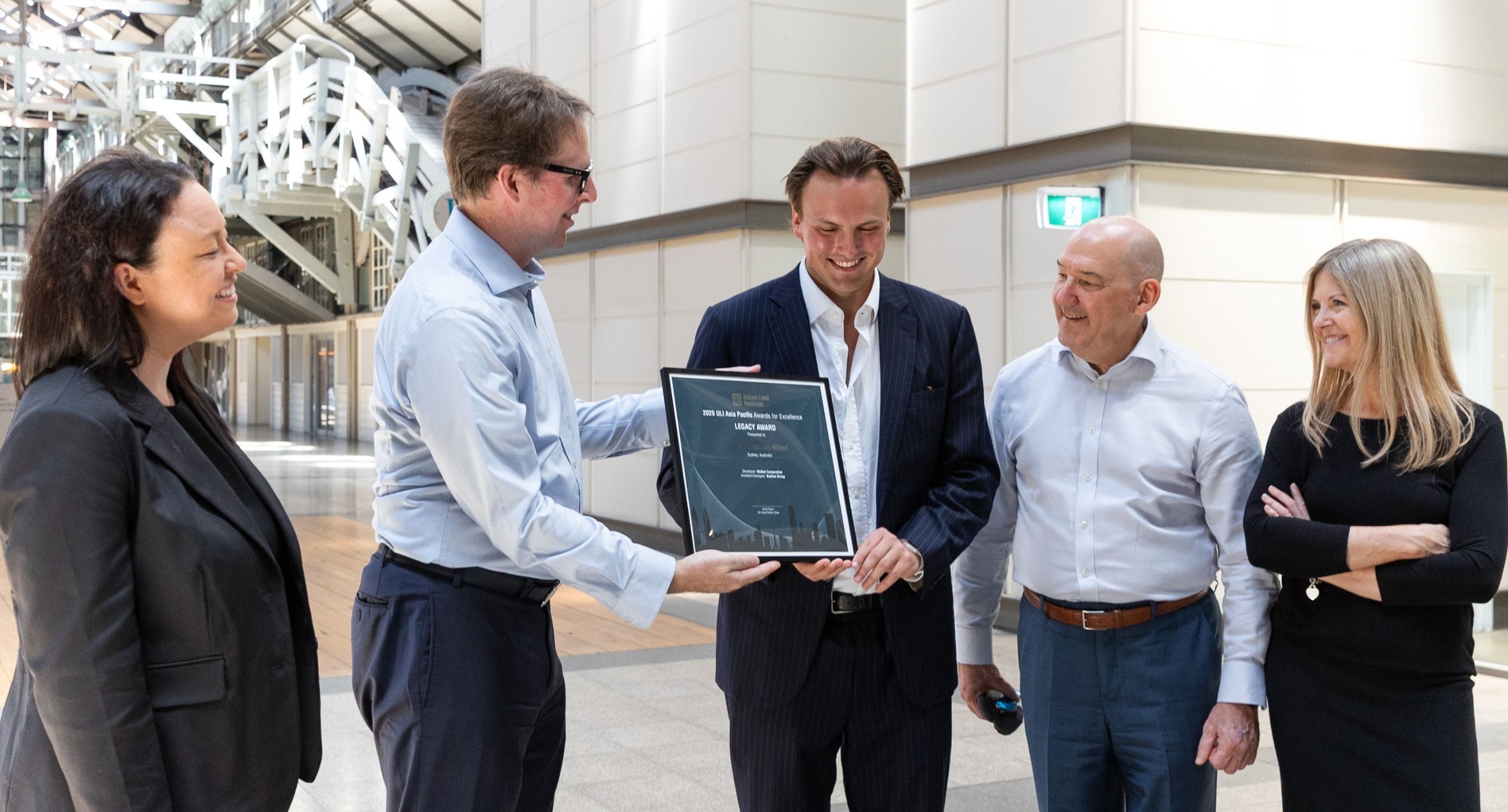
Hugo Walker accepting the Legacy Award from Urban Land Institute executives
Today, Woolloomooloo Wharf is home to more than 300 apartments, the Ovolo Hotel, a large marina, a public boardwalk and some of Sydney’s most celebrated restaurants including China Doll, OTTO and Kingsleys.
The precinct attracts millions of locals and visitors each year and continues to play a leading role in Sydney’s cultural and tourism economy, renowned as a place where exceptional heritage restoration and the art of the long lunch come together on one of the world’s most recognisable waterfronts.